


Turns Out, I Didn’t Know How to Start a School

I was sitting in a the National Council of Teachers of English conference in Boston, listening to speaker after speaker share incredible ideas about social justice in the classroom: ideas about what is possible when we really listen to children, center their identities and experiences, and create classrooms where students can question, explore, and see themselves as changemakers.
And all I could think was: This isn't possible in our current educational model.
Not really.
There are too many constraints. Too many pacing guides to adhere to. Too many scripted curricula to follow. Too many lessons but not enough time. Too many systems that aren’t designed for the kind of learning these speakers were describing. Too many things I had spent my career working around, rather than being able to change.
So, during the lunch break, I called my friend Raphi.
"I think I want to start a school," I said.
Without missing a beat he replied "I have been waiting years for this phone call."
This was both incredibly validating and, in retrospect, slightly terrifying.
I knew how to be an educator. I had spent my entire career learning how to teach, lead schools, develop curriculum, support teachers, and think deeply about what children deserve.
What I did not know how to do was actually start a school.
To start a school, you need an accountant, a fundraiser, an insurance expert, an HR manager, a lawyer, a payroll specialist, a PR person, marketing executive, and a small-business strategist. I wasn’t any of those things.
But I sure as hell am now.
And I could not have learned any of it without the people who were willing to answer my questions, share what they knew, make an introduction, look at a document, recommend a resource, or simply say, "You should talk to this person."
People often say, "I couldn't have done it without you!" as some sort of platitude.
But I genuinely could not have done this launch without the support, advice, resources, time, and connections from all of the people I have spoken to over the past two years.
One of the earliest pieces of advice that stuck with me came from another nonprofit leader who focuses on early education. She told me, "When it comes to hiring, you've gotta punch above your weight class."
She told me about the early days of her organization, when she knew she needed a development director. She also knew exactly who she wanted: a fundraiser working at a large, established Boston museum who, frankly, had no business wanting to work for her tiny organization.
So she asked her.
She asked what it would take to get her to come work for a much smaller organization, and then she made it happen.
That advice changed the way I thought about hiring. I didn't need to hire people who were simply willing to take a chance on a new school. I needed to find people who were really, really good at what they did and make them believe in what we were building.
Fast forward a couple months to the day I received an email from Lisa Goddard, who wrote that she was doing her PhD in Reggio Childhood Studies and was interested in learning more about me and my vision for the school. That advice came back to me. I thought: Punch above my weight class. So we set up a meeting, I asked her what it would take for her to take this one with me, and now she's our Pedagogista.
Another nonprofit leader once told me about her fear of accidentally doing something illegal simply because she didn't know what she didn't know. Same, same. Her solution? Gusto.
I had never heard of Gusto.
I now use Gusto for payroll, and I have a much better understanding of the many, many things I apparently need to know about employing actual human beings. There are a lot of things they don't teach you in education programs.
Then there was the BPS Principal who told me, "You have to attach yourself to someone or something to gain credibility. Otherwise, who are you and why should anyone trust you?"
That one stayed with me, too.
Starting something from scratch means asking people to believe in something that doesn't exist yet. You have no track record. No building. No alumni. No years of data to point to. Just a vision, a plan, and, hopefully, enough people who are willing to believe that you might actually pull it off.
I learned pretty quickly that relationships matter. Credibility matters. And sometimes the fastest way to build trust is to find people and organizations whose work you respect and figure out how your work can be connected to theirs.
And then there were the Boston Business Mentors, and my mentor, Sue.
Before Sue, I had never heard of cash flow forecasting.
I now feel like I live my life off of cash flow forecasting.
Sue didn't just teach me how to think about the financial side of running an organization. She connected me with people who knew things I didn't know I needed to know.
An HR expert helped me build policies and an employee handbook. A development expert helped me navigate tax forms and understand how to figure out who was donating money to whom. A small business owner and mentor helped me think differently about identifying other businesses with shared interests — organizations that could benefit from Douglass Ridley being successful, and that we could potentially benefit from in return.
They then introduced me to the Charles River Chamber of Commerce, which opened up an entirely new network of connections and experts.
One introduction led to another, which led to another.
And then there was another piece of advice that has probably saved me more money than anything else: be frugal and scrappy.
This came from an independent school founder who started his school in the 1970s. His story helped me resist the model I had been imagining in my head and stay true to myself.
Just like the start of the schools in Reggio Emilia, Italy, he started with one other person and a handful of students. Six or seven children in the first year, maybe ten or twelve by the end of that year, fourteen the next, twenty-something the year after that. And then it slowly grew from there.
They didn't start with everything.
They didn't have fancy furniture. They didn't have all of the bells and whistles. They used the city as a resource. They figured out what they actually needed and built from there.
And, more than sixty years later, that school is still thriving.
That advice has been particularly helpful for me because there have been plenty of moments when I've looked at other private schools in Boston and thought, We need that. And that. And definitely that.
If we're going to compete, I've thought, don't we need the state-of-the-art technology? The beautiful furniture? The newest equipment? All of the resources?
But the answer, I've learned, is no.
We need to build the school we actually want to build.
And that has meant getting scrappy.
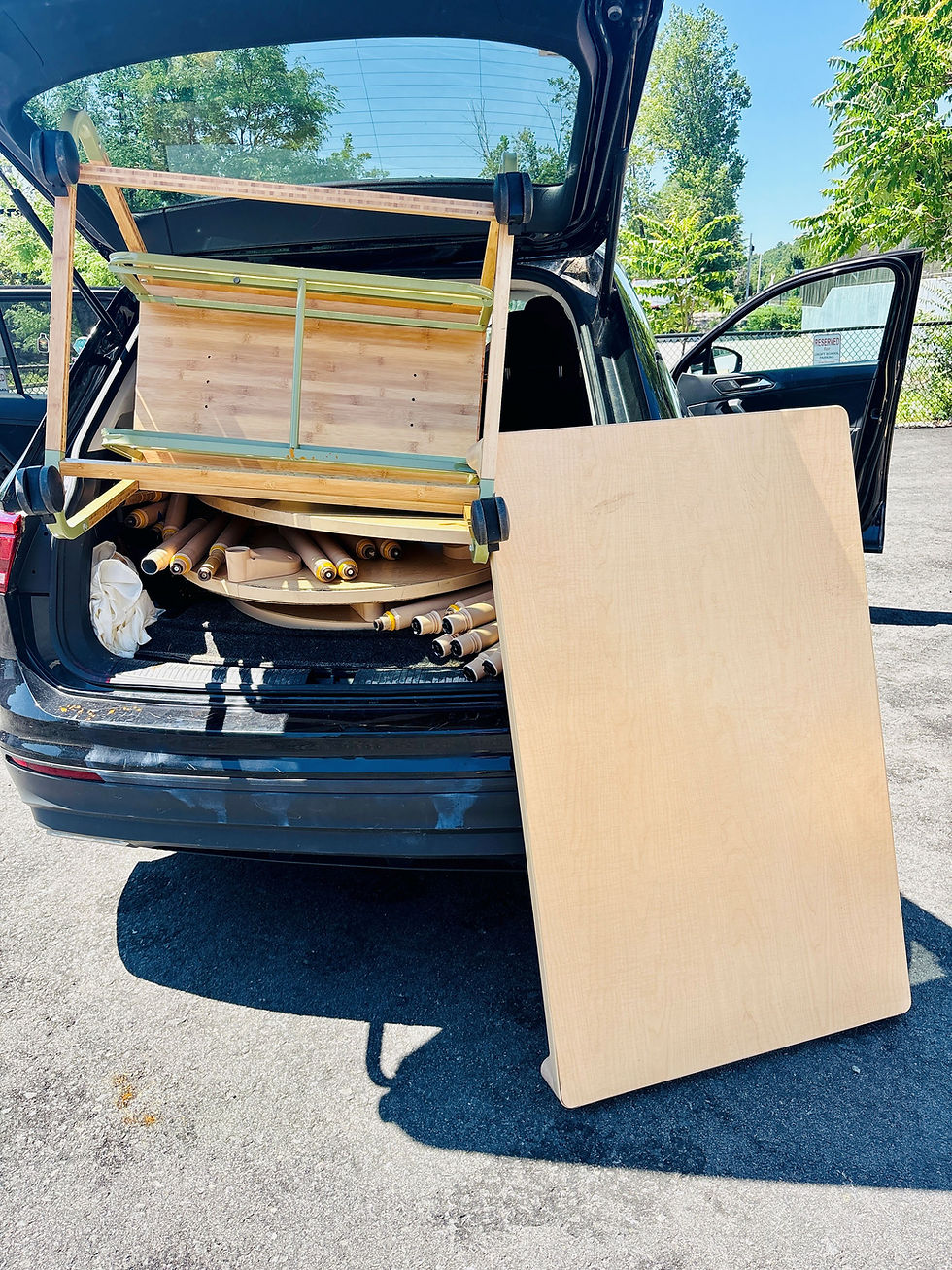
It has meant early childhood educators giving us materials they had. Retired teachers passing things along. Other programs sharing resources. Neighbors offering things they no longer need. Finding treasures on Facebook Marketplace. Taking advantage of whatever the city has to offer. Saying yes when someone asks, "Would you like this?"
And something unexpected has happened as a result.
Our spaces feel more like us.
They don't look like they were ordered out of a catalog. They look like a compilation of the people who have helped us get here.
There are things in our classrooms that were donated by educators who believe in what we're doing. Things that came from neighbors, other schools, families, and people who simply wanted to help.
Our school is, in many ways, a physical reflection of our community.
And I love that.
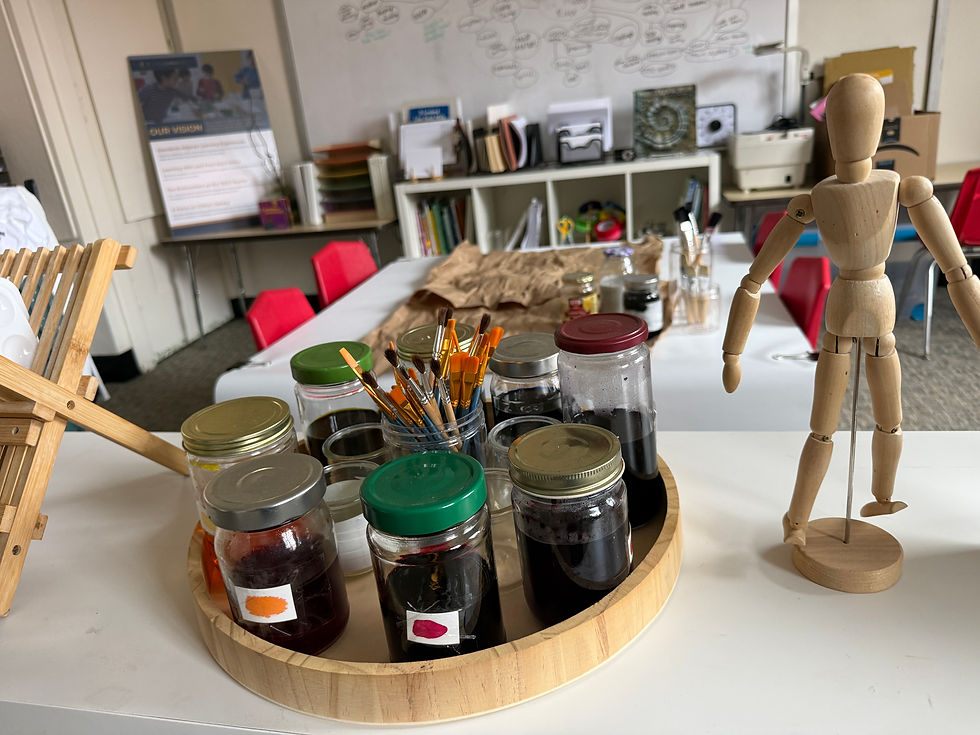
We aren't fancy. We don't want to be fancy.
We want to be thoughtful. We want to be creative. We want to use what we have well. We want to be good neighbors and good stewards of our resources. And we want to be mindful of the environmental footprint we create while building something new.
There is something deeply satisfying about knowing that our school didn't need to arrive fully formed.
It could grow.
It could evolve.
It could be shaped by the people who showed up.
Which, I realize now, is a pretty good description of the kind of learning community we're trying to create for children, too.
We talk a lot at Douglass Ridley about leading with curiosity and learning and growing together. About asking questions, taking risks, sharing what we learn, and recognizing that none of us has to have all the answers.
It turns out those aren't just things we want for our kids.
There is still so much I don't know. There are still people I need to call, questions I need to ask, and things I need to figure out. I hope that never really stops. The school is still taking shape, and so much of what Douglass Ridley becomes will continue to be informed by the people who are generous enough to share their experience, their ideas, their resources, and their time with me.
So to everyone who has answered one of those calls, sat down with me, reviewed something, shared a resource, made an introduction, talked me through a problem, donated something, or simply said, "Yes, you can do this" — thank you.
I really couldn't have done it without you. And I can't wait to see what we keep building together.


Comments